
An empty roll-off dumpster in Yonkers weighs between 2,000 and 8,000 pounds depending on its size—10-yard units average 2,500 pounds while 40-yard containers reach 8,000 pounds. You’ll encounter a two-step weighing process: certified scales capture the gross weight of your loaded dumpster, and the tare weight is then subtracted to determine the billable tonnage. This distinction matters because disposal fees are calculated by net weight, not volume, and Yonkers Municipal Code Section 342-8 imposes a strict 10-ton maximum per haul for approved facilities.
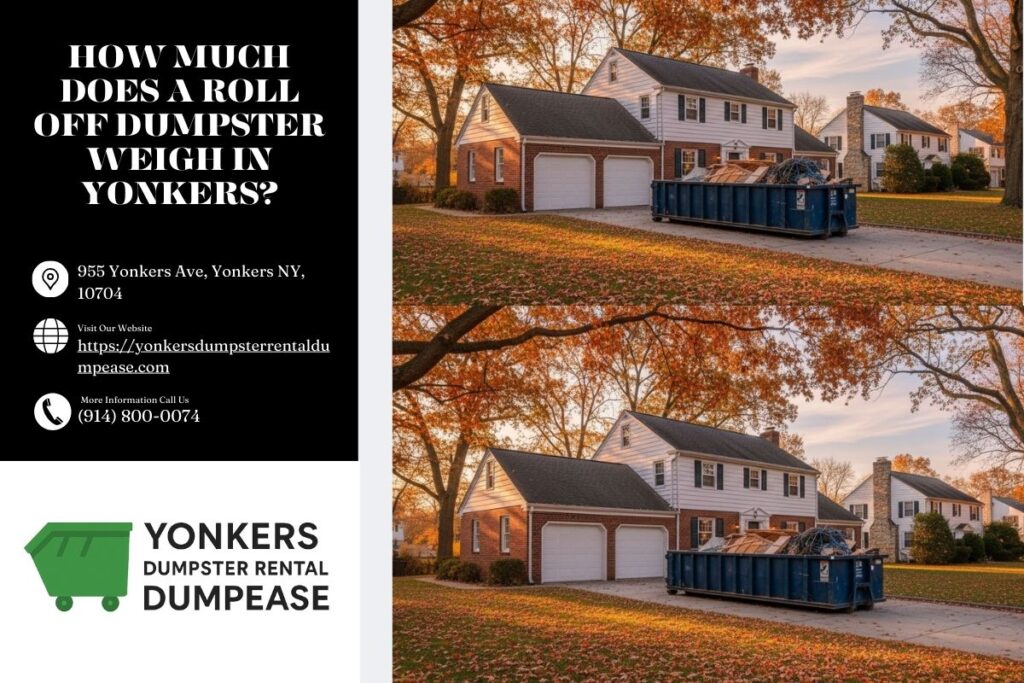
When evaluating dumpster rental options in Yonkers, you’ll need to distinguish between the container’s empty weight and your project’s total disposal weight.
Empty roll-off dumpsters typically weigh between 2,000-8,000 pounds depending on size—10-yarders average 2,500 pounds while 40-yarders reach 8,000 pounds.
You’re legally responsible for staying within New York’s highest gross vehicle weight ratings when hauling debris. Yonkers enforces strict weight limits: exceeding your container’s capacity triggers overage fees and potential transportation violations.
Standard weight allowances range from 2 to 10 tons, depending on dumpster size and debris type. Concrete, soil, and brick require specialized handling due to density constraints.
You’ll improve cost efficiency by accurately estimating your project’s debris volume and composition before scheduling delivery. Understanding these specifications prevents compliance issues and unexpected charges.
See also: roll-off dumpster rentals near Yonkers
While most customers focus solely on debris volume, the distinction between empty weight and loaded weight determines your regulatory compliance and final costs.
Empty weight (tare weight) represents your dumpster’s baseline—typically 2,000-8,000 pounds depending on size. Loaded weight includes everything: container plus your debris. This distinction matters because you’re paying for disposal by weight, and Yonkers regulations mandate specific limits.
Critical weight considerations:
You’ll avoid unexpected charges by understanding both measurements.
Request certified scales documentation from DumpEase—transparency protects your budget and keeps operations compliant.
Before your dumpster leaves the site, it undergoes a two-step weighing process to determine your final disposal costs.
Initially, certified truck scales measure the gross weight of your loaded dumpster at the landfill. The facility’s scale system automatically records this data, eliminating human error.
Next, they subtract the truck’s tare weight (the recorded empty-vehicle weight) from the gross weight. This calculation shows the net weight of your debris, measured in tons or pounds.
You’ll receive a scale ticket documenting these measurements, which serves as your official disposal record. This standardized process ensures you’re charged accurately for what you actually dispose of, not based on estimates.
The weighing method complies with New York State Department of Weights and Measures regulations, protecting you from arbitrary fees or billing discrepancies.
Roll-off dumpsters in Yonkers are subject to specific weight limits that affect your rental costs and legal compliance.
Understanding these limits lets you avoid overweight fees and maintain control over your project budget.
Standard weight allowances by container size:
These thresholds reflect New York State DOT regulations governing vehicle weights on public roads.
Exceeding your contracted weight triggers per-ton overage charges, typically $50-$100 per ton.
Material density considerably affects total weight—concrete and soil reach limits faster than household debris.
Calculate your debris weight beforehand to select appropriate container capacity and prevent unexpected costs.
Each dumpster size has a distinct weight limit that aligns with both structural capacity and transportation regulations in Yonkers.
You’ll find 10-yard dumpsters typically max out at 2-3 tons, ideal for small-scale projects. 20-yard containers hold 3-4 tons and accommodate moderate renovations and cleanouts. The 30-yard option supports 4-5 tons, suitable for substantial demolition work. 40-yard dumpsters hold 5-6 tons, though some providers extend the limit to 8 tons for specific materials.
These thresholds aren’t arbitrary—DOT regulations, chassis load ratings, and municipal roadway restrictions determine them. Exceeding your designated weight limit triggers overage fees and may result in safety violations.
You’re responsible for monitoring debris density and total load. Understanding these parameters lets you select appropriate container sizes, avoid penalties, and maintain compliance without unnecessary constraints on your project scope.
Most rental agreements in Yonkers include 1-2 tons of disposal capacity in the base rate, regardless of container size.
You’ll pay overage fees for exceeding these thresholds, typically $50-$75 per extra ton. Understanding your project’s waste density helps you avoid unexpected charges.
Standard tonnage allocations by container:
At Yonkers Dumpster Rental DumpEase, we provide transparent weight monitoring and pre-project consultations.
You’re free to choose higher-tonnage packages upfront at discounted rates, rather than face per-ton penalties.
Review your rental agreement’s weight provisions before loading begins.
Knowing your tonnage limits is meaningless if you can’t estimate the actual weight of your debris. Different materials have vastly different densities, directly impacting your dumpster’s total weight.
Concrete and brick weigh approximately 4,000 pounds per cubic yard—you’ll hit tonnage limits quickly. Soil and dirt average 2,200 pounds per cubic yard. Asphalt shingles weigh 800 pounds per cubic yard, while drywall weighs about 500 pounds per cubic yard.
Wood and yard waste are lighter at 300-400 pounds per cubic yard. Mixed household junk typically averages 350 pounds per cubic yard.
Understanding these density standards helps you calculate your project’s weight accurately, preventing overage fees and ensuring you select the right dumpster size from Yonkers Dumpster Rental DumpEase for your specific material type.
When loading construction debris, certain materials can quickly exhaust your weight allowance, even with a full dumpster.
Understanding these dense materials helps you avoid overage fees and transportation issues.
High-Density Materials to Monitor:
You’ll find that a 10-yard dumpster filled halfway with concrete can exceed typical weight limits of 2-4 tons.
Most Yonkers haulers charge $50-$100 per ton for overages.
If you’re disposing of these materials, consider ordering a dedicated heavy debris dumpster with reinforced construction and a higher weight capacity—typically 10 tons, rather than the standard 2-3 ton limit.
While heavy materials quickly max out weight limits, household junk and renovation waste typically fill your dumpster’s volume before approaching weight thresholds. You’ll find these lighter loads give you maximum flexibility in what you can dispose of without weight penalties.
| Material Type | Avg Weight per Yard³ | Volume Concern |
|---|---|---|
| Household Junk | 300-400 lbs | High |
| Furniture/Cardboard | 200-300 lbs | Very High |
| Yard Waste | 400-600 lbs | High |
Most residential cleanouts in Yonkers reach capacity at 40-60% of the weight limit. You’re paying for space, not tonnage, with these projects. Drywall, wood trim, and general demolition debris are bulk materials that do not trigger overage fees. This means you can load freely without constant weight calculations restricting your project momentum.
Even with volume-based loads staying well below weight thresholds, exceeding your dumpster’s tonnage limit triggers substantial financial penalties.
Most Yonkers rental agreements include a specified weight allowance—typically 1-4 tons depending on container size. Overages incur charges ranging from $50 to $100 per extra ton, directly impacting your project budget.
Strategic weight management practices:
You’ll maintain cost control by accurately estimating material weights before rental.
DumpEase provides transparent weight limits and real-time consultation to prevent unnecessary overage charges while ensuring regulatory compliance throughout your Yonkers project.
Exceeding your dumpster’s weight capacity initiates a multi-stage consequence protocol that begins at the pickup site and extends through disposal facility processing.
You’ll face immediate overage charges—typically $50-$100 per ton beyond your contracted limit.
Transportation becomes problematic; overweight containers can’t legally travel on Yonkers roads without DOT compliance, potentially stranding your dumpster onsite until you reduce the load.
Disposal facilities scan incoming loads, triggering additional landfill fees that are passed directly to you.
Your project timeline suffers as haulers coordinate weight reduction or multiple trips.
Repeated violations may result in contract termination or future rental restrictions.
Understanding your material’s density beforehand prevents these complications.
Calculate waste weight using standard conversion rates: concrete averages 4,000 lb/cubic yard, while household debris averages 300-400 lb/cubic yard.
Implement these compliance strategies to maintain operational freedom:
Proactive tonnage monitoring eliminates unexpected fees while keeping your project timeline intact and budget predictable.
Yonkers Municipal Code Section 342-8 mandates specific weight restrictions that directly impact your dumpster rental costs and disposal options.
You’ll face a maximum 10-ton limit per haul to city-approved facilities, with overweight loads automatically rejected at weigh stations. The Westchester County transfer station enforces strict per-axle weight limits of 20,000 pounds, affecting which truck configurations can legally transport your container.
Your disposal costs scale directly with tonnage—exceeding included weight allowances results in $75-$95 per extra ton.
Construction debris is subject to different density classifications than household waste under local ordinances, requiring separate accounting. You’re prohibited from mixing certain materials that alter weight calculations, including asbestos-containing materials or contaminated soils.
Understanding these regulatory boundaries helps you optimize load composition, avoid penalty charges, and maintain compliance with municipal waste management requirements.
When you transport waste to regional landfills, you’ll encounter tiered weight thresholds that determine acceptance and surcharge structures. Westchester County facilities implement specific protocols that directly impact your disposal costs and operational flexibility.
Understanding these regulatory parameters helps you maintain compliance while maximizing load efficiency:
You’ll need documentation proving the load weight at a certified scale before landfill entry. Pre-weighing your dumpster enables strategic load management, preventing unexpected fees that could limit your project budget.
DumpEase provides weight guidance aligned with current Yonkers disposal regulations, ensuring you won’t face compliance issues or financial penalties.
Strategic material separation before loading reduces container weight by 30-40% while improving disposal efficiency.
You’ll optimize payload capacity by separating heavy materials such as concrete, soil, and metal from lighter debris. This approach prevents premature weight limit violations and costly overweight fees.
Remove water-saturated materials immediately—they add unnecessary pounds that don’t count toward your actual waste volume.
You’re free to manage your project timeline without unexpected weight surcharges when you pre-sort effectively.
Separate recyclable metals, which Yonkers facilities accept at reduced rates.
You’ll cut disposal costs while maintaining compliance with local waste management regulations.
Document your sorting process to verify weight calculations if disputes arise.
Wise segregation gives you control over expenses and keeps your project moving without regulatory delays or financial penalties.
You shouldn’t move a roll-off dumpster yourself—it’s unsafe and violates rental agreements. These units weigh 3,000-8,000+ pounds empty, requiring specialized equipment. Contact DumpEase immediately if repositioning’s needed; we’ll handle it properly and legally.
You’ll need a permit if you’re placing the dumpster on public property like streets or sidewalks in Yonkers. Contact the Department of Public Works at (914) 377-6277 to obtain the required permit and verify current regulations.
You’ll typically keep your dumpster for 7-14 days with standard rental periods. You’re free to extend beyond that—coordinate with DumpEase beforehand. Rental duration flexibility guarantees you’re not rushed while completing your project on your timeline.
You can’t dispose of hazardous materials, electronics, tires, batteries, appliances with refrigerants, medical waste, or liquids in roll-off dumpsters. Yonkers regulations strictly prohibit these items to protect environmental safety and comply with local waste management laws.
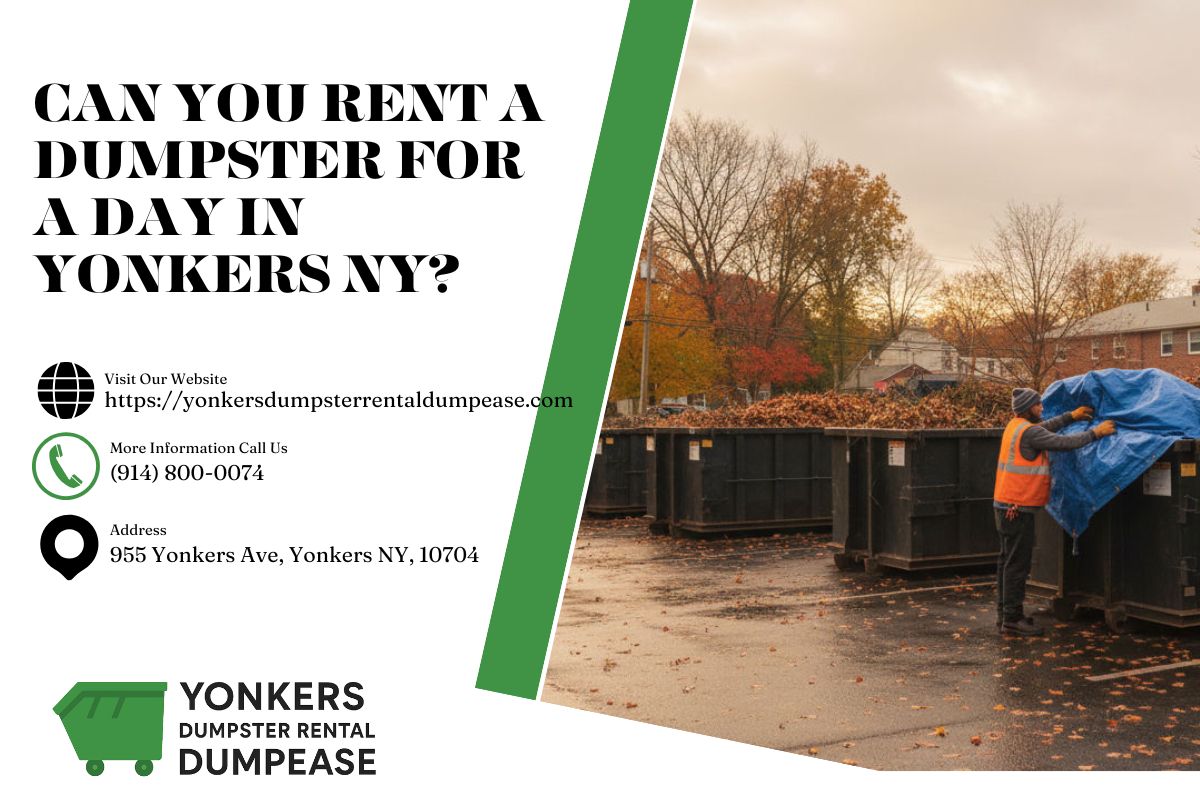
Yes, weather notably impacts your dumpster’s weight. Rain adds substantial water weight to porous materials such as wood, drywall, and cardboard, potentially increasing loads by 20-30%. You’ll want tarps to avoid unexpected overage fees and maintain accurate weight compliance.